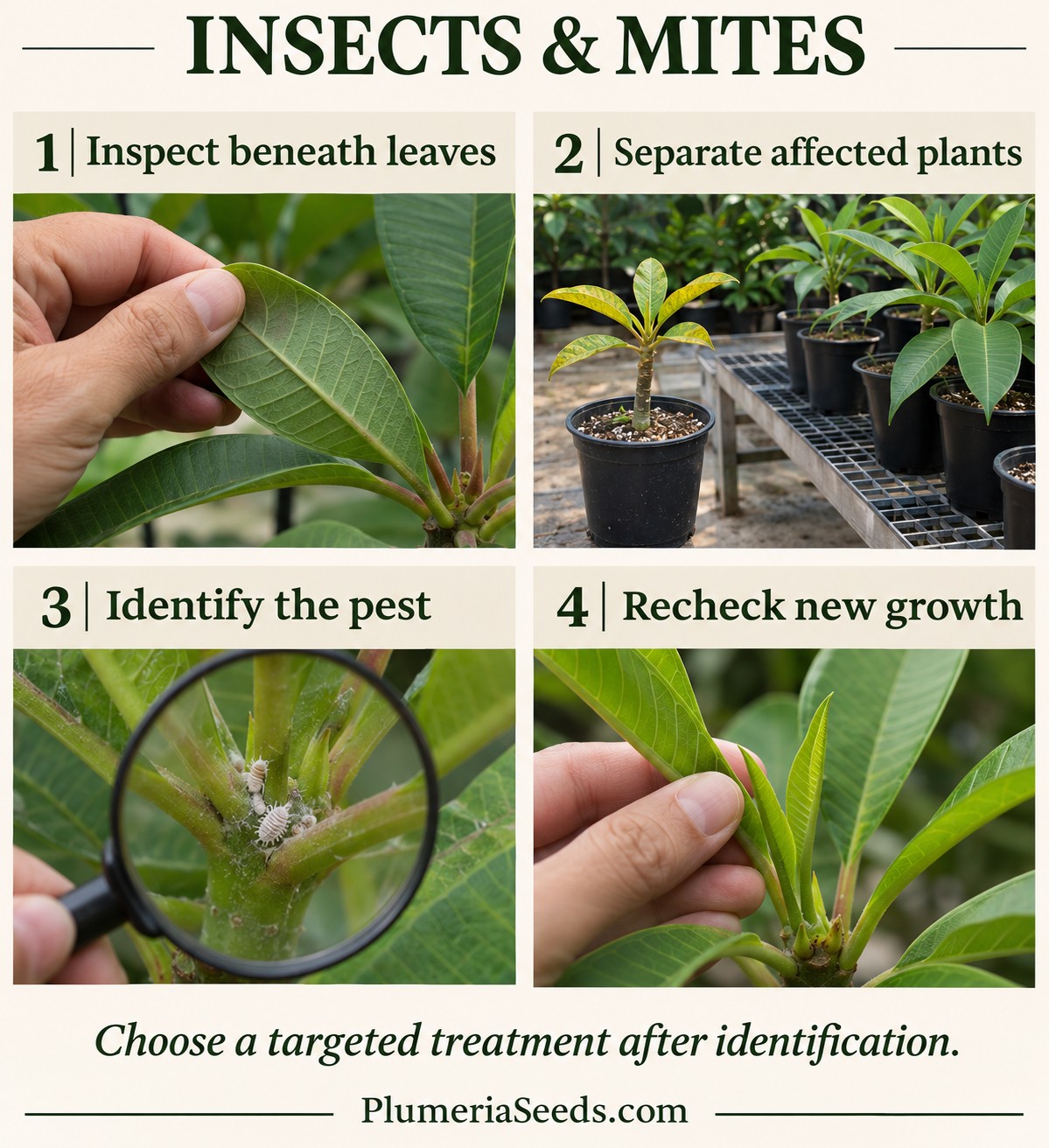
I want to find a problem while it is small enough to manage. Look under leaves, around the growing tip, and at the pot surface. Not every insect on a plumeria is feeding on it, and mites are not insects.
Inspect, identify, then act
Check new plants separately before placing them beside seedlings. Inspect the collection regularly, and more often during an outbreak. Use a hand lens and tap a suspect leaf over white paper to help see small moving pests. Keep notes on live pests and new damage, not just old scars.
- Spider mites: Fine pale stippling, bronzing, and sometimes webbing warrant a close look underneath leaves. A gentle water rinse can reduce numbers on sturdy plants; protect fragile seedlings and let leaves dry. Avoid drought stress and preserve predators. If treatment is needed, choose a labeled mite-effective product rather than assuming any insecticide works.
- Aphids, mealybugs, soft scale, and whiteflies: Look for colonies, cottony masses, attached bumps, honeydew, or small flying adults. Isolate the affected pot and remove manageable infestations gently. Check ants where honeydew is present. Some scales do not produce honeydew.
- Thrips: Silvery scarring, black specks, and damaged new growth or buds are clues, not proof. Identify the pest; hidden feeding sites can make sprays difficult to time. Remove badly infested material when practical, and avoid treating every distorted leaf as thrips.
- Fungus gnats: Adults are a warning to inspect the moist growing medium. Larvae can damage young roots. Reduce excess moisture and decaying debris; use yellow cards to monitor adults. For persistent confirmed infestations, a product labeled for fungus gnats containing Bacillus thuringiensis israelensis (Bti) can target larvae. Caterpillar Bt is a different treatment. Follow the specific product’s directions and repeat interval.
- Chewing pests: Check fresh holes, missing leaf edges, frass, and nighttime activity. Remove an identified pest when practical. Do not handle unknown spiny caterpillars bare-handed or spray simply because an unfamiliar insect is present.
If a spray is justified
- Identify the target and confirm the product is labeled for the plant/use site and pest. Indoors and outdoors are not interchangeable use sites.
- Use horticultural soap or oil products as directed; household dish detergent is not the same formulation.
- Test a small area and observe for injury before treating the batch. Follow temperature, sunlight, mixing, and application restrictions. Stressed seedlings can be sensitive.
- Reach the pest’s actual location and follow the labeled repeat interval. Do not increase concentration to compensate for poor coverage.
- Recheck live pests and new growth. Protect beneficial insects and avoid routine broad-spectrum spraying without a target.
References: UC IPM: Spider Mites; UC IPM: Thrips; UC IPM: Fungus Gnats; UF/IFAS: Natural Products for Managing Landscape and Garden Pests; UC IPM: Houseplant Problems.