University of Hawaiʻi CTAHR guidance says plumeria seedlings can be moved to individual pots after one or two pairs of true leaves have developed. In practice, I also look for a root system that can hold the plug or mix together, active growth, and a next container that adds modest room without surrounding a tiny root system with too much wet mix.
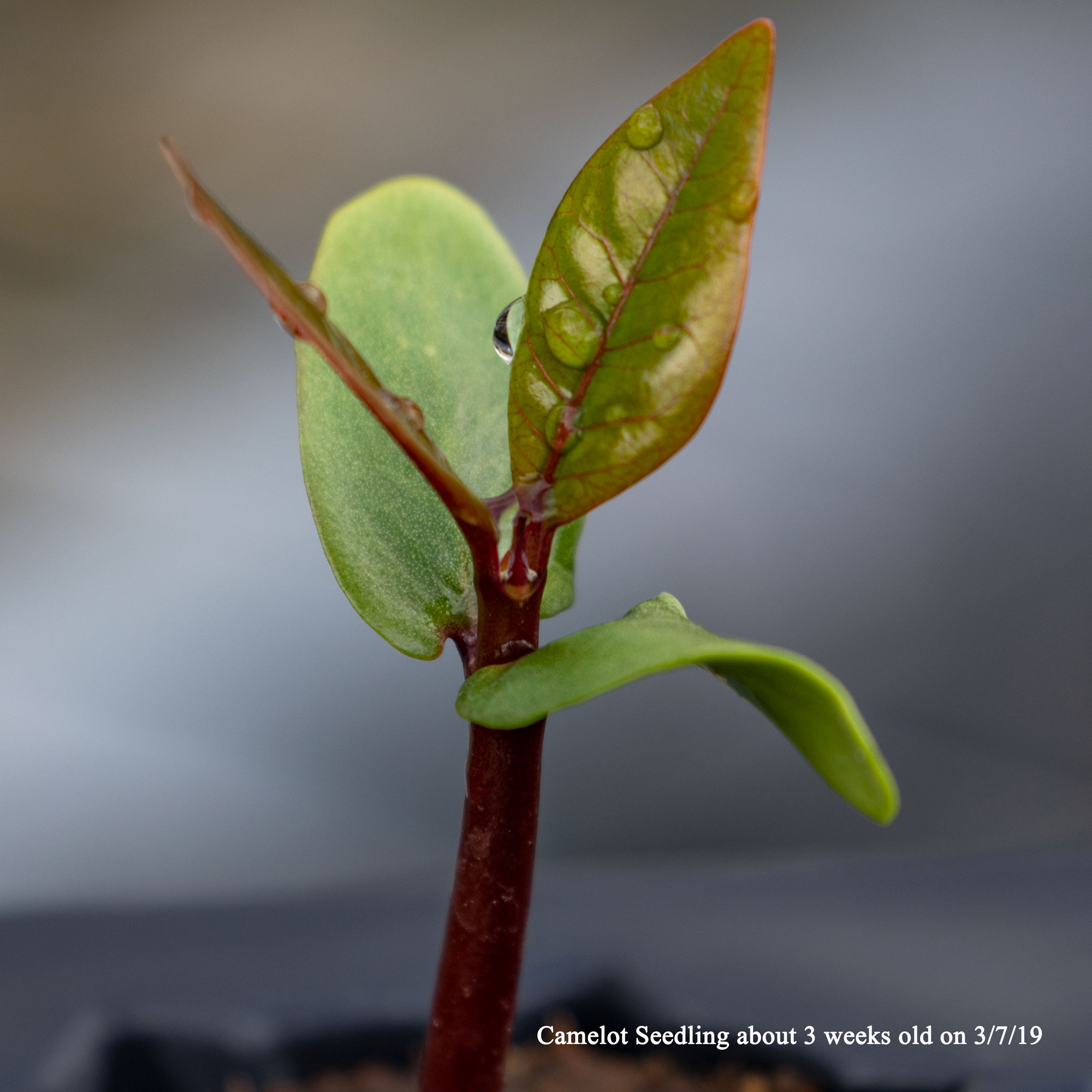
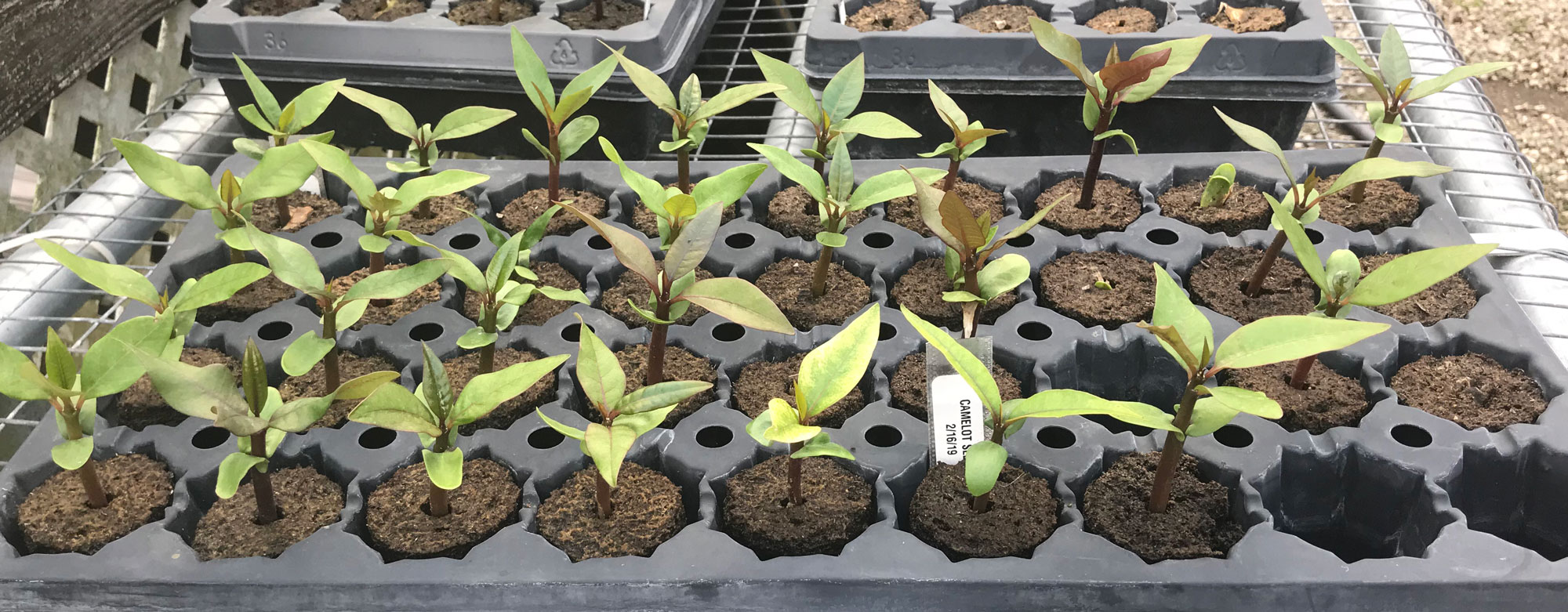

Grower note: I would rather transplant a little carefully than early and rough. Preserving roots is usually more important than winning a race to a bigger pot.
Signs a Seedling Is Ready
- One or two pairs of true leaves have developed.
- Roots are visible at the edge or bottom of the plug.
- The plug or starter mix holds together when handled gently.
- The seedling is actively growing, with warm weather or protected conditions available after transplanting.
Container Size Matters
I avoid jumping a very small seedling into an oversized container. Choose a pot with drainage holes that is about 1–2 inches wider than the current cell or plug. This modest step up gives roots room while still allowing the grower to control moisture.
After Transplanting
- Water in gently to settle the mix.
- Keep the seedling bright but protected from sudden harsh sun.
- Watch for wilting caused by root disturbance or dry pockets.
- Wait for active growth before pushing fertilizer hard.
Keep Learning
- Fertilizing New Seedlings – feeding after seedlings are established
- Damping Off Fungal Disease – moisture-related risks
- Growing Plumeria Seedlings – young seedling care