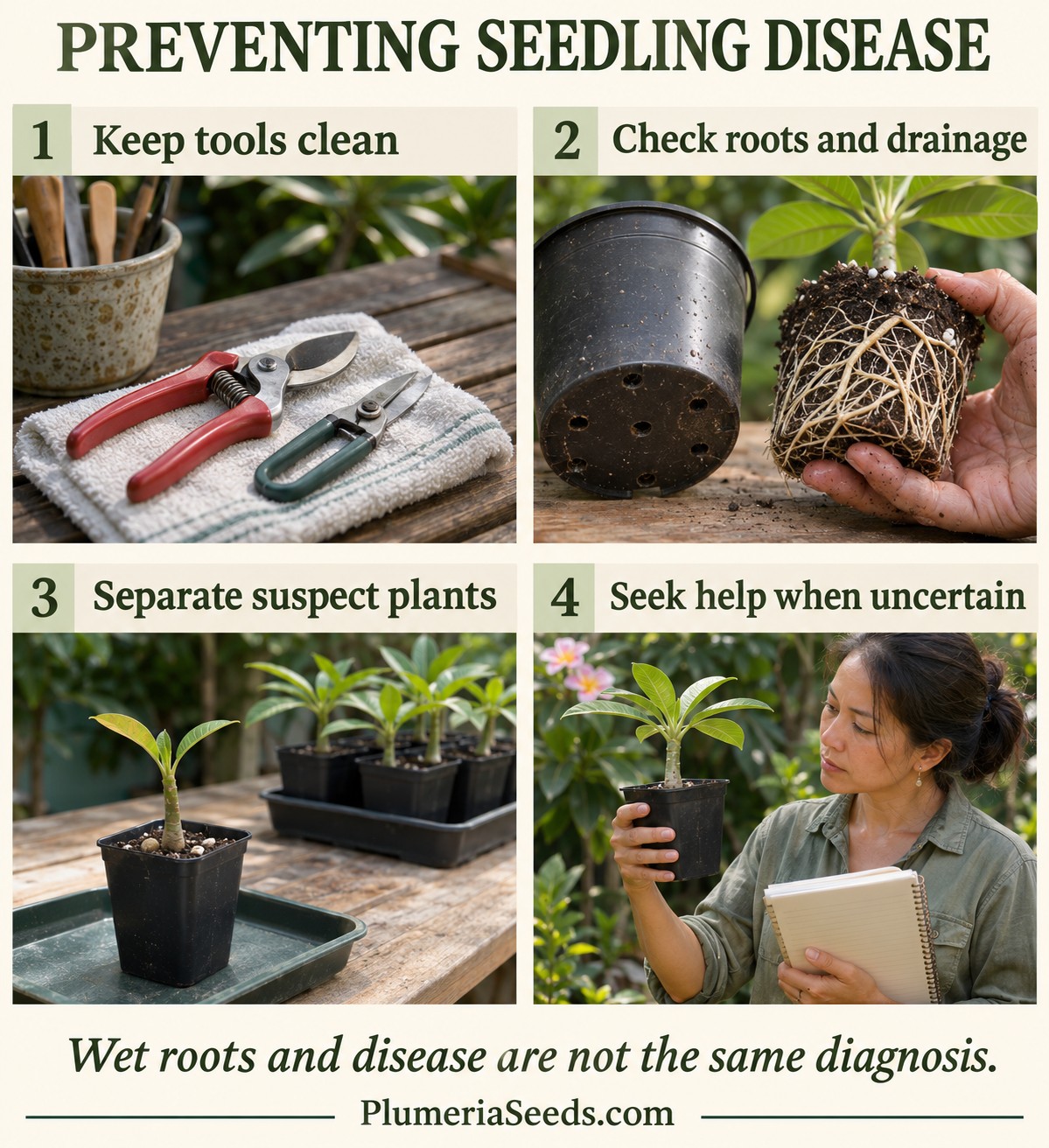
Good sanitation and water management reduce risk, but they do not identify a pathogen. A seedling with soft roots may have suffered oxygen shortage, infection, or both.
Damping off
A pinched, water-soaked stem near the surface followed by collapse is concerning for damping off. Remove the collapsed seedling and its affected medium, isolate that area, and check neighboring plants. A girdled seedling usually will not recover. Use clean pots, fresh medium, room between plants, and appropriate moisture and light for the next batch. Fertilizer is not a treatment.
Root and stem decay
- Separate a declining plant and stop shared runoff or reservoir contact with healthy plants.
- Check whether the pot drains and whether it has remained saturated. If justified by continued decline, ease out the root ball. Firmness and structure matter more than color alone; stained roots are not necessarily rotten.
- If only some roots are damaged and the stem is sound, careful removal of clearly dead tissue and repotting in fresh suitable mix may be worth trying. Use clean tools and a pot matched to the remaining roots. Recovery is uncertain.
- Discard seedlings with extensive soft decay or a collapsed base. Do not spread their medium through other pots. Clean debris from tools and containers before disinfecting according to the product instructions.
- For repeated losses, submit a representative recently affected plant and growing-medium information to a diagnostic service. Different pathogens may need different management.
Plumeria rust
Yellow spotting above the leaf with orange powdery pustules underneath is characteristic of plumeria rust, caused by Coleosporium plumeriae. Collect fallen infected leaves, improve spacing, and avoid prolonged leaf wetness. Limited removal of badly affected foliage can help; indiscriminate stripping can leave a small seedling with little working leaf area. Rust management protects foliage—it does not restore damaged leaves.
Other leaf spots and blackened tips
Cold injury, sun or spray damage, and infections can overlap in appearance. Photograph the progression and inspect firmness and moisture conditions. Do not name a fungal or bacterial disease from a black tip alone. If lesions spread or losses continue, seek diagnosis before selecting a fungicide.
For a small collection, isolation, drainage correction, and sanitation come first. Where a confirmed disease warrants a pesticide, use a product labeled for that disease and use site with locally appropriate guidance. Avoid routine peroxide, bleach, or unverified home-remedy drenches on living roots. A seed-soak recipe is not a root-disease treatment.
References: Minnesota Extension: Preventing Seedling Damping Off; UF/IFAS: Rusts on Ornamentals in Florida; Oregon State Extension: Preventing Phytophthora Infestations in Restoration Nurseries.