A bag of moist medium combines some of the moisture buffering of a pot with the compact size of a baggie. PlumeriaKopen lists this approach, but published detail is limited. I would begin with a small trial alongside direct-sown seeds. The instructions here are a practical adaptation, not a claim that I used this method for my 2024 Majestic batch.
Best fit: Small experimental batches where space is limited.
What you need
- A clean transparent resealable bag or small clear food container.
- Fresh seed-starting medium or horticultural vermiculite; use a small amount, not a tightly packed bag.
- Clean water, labels, a spoon and prepared drained pots.
Step by step: what to do and why
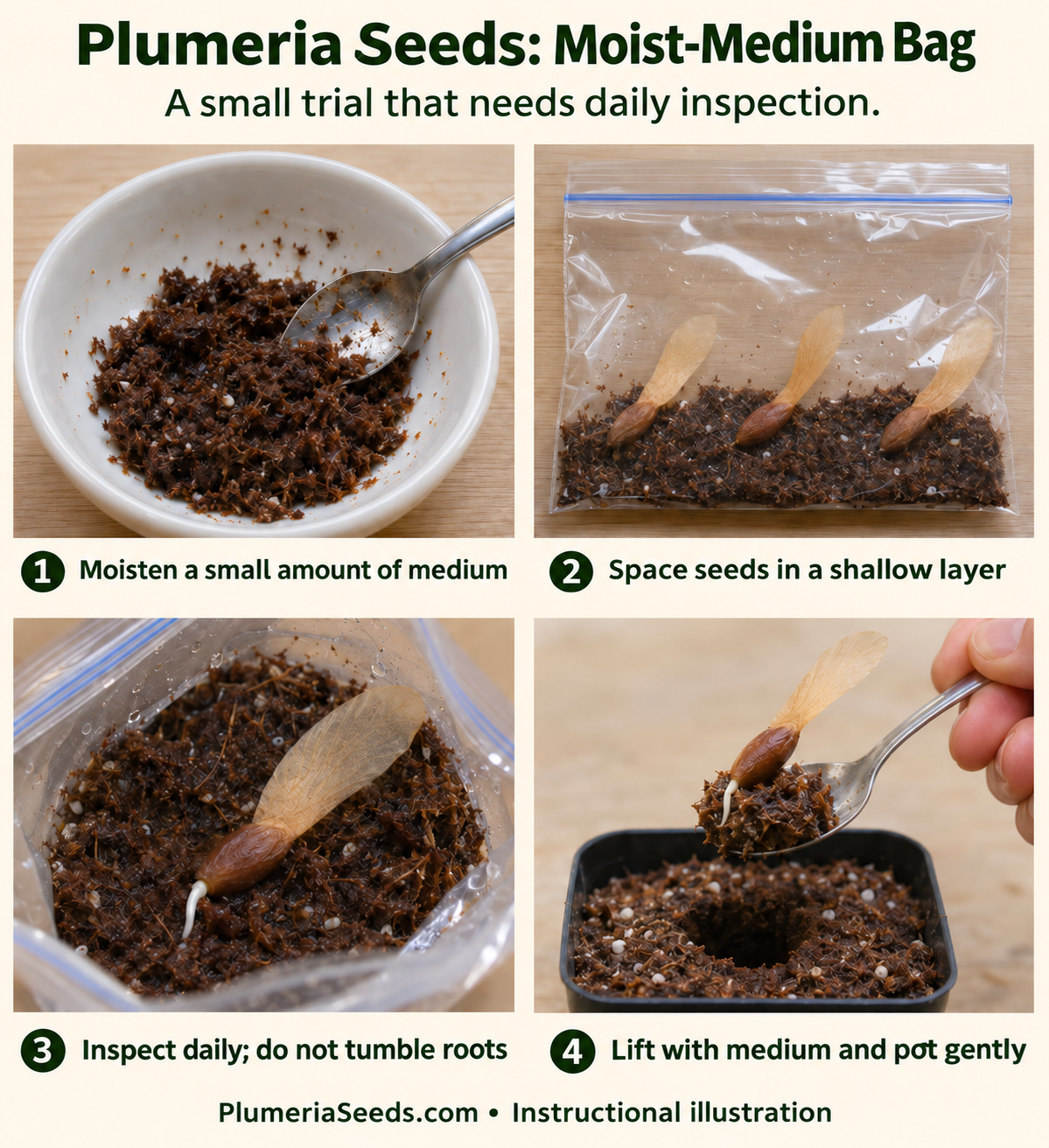
1. Choose one medium for the trial
Use one consistent material and record it. Do not mix several additives or fertilizer products into the first test.
Why: When the result is different from your usual method, you need to know what actually changed.
2. Moisten before filling
Dampen the medium evenly in a clean container. If free water collects when you tilt it, drain or adjust before adding it to the bag.
Why: Once enclosed, a wet mixture dries very slowly. Starting moisture is easier to correct before seeds are involved.
3. Spread a shallow layer
Lay the bag flat and add only enough medium to support the seed bodies in a single accessible layer. Keep some air space.
Why: A deep bag hides seeds, increases handling during inspection and makes it easier for roots to become entangled.
4. Set out the seeds separately
Place the seeds with their bodies in moist contact and wings visible where possible. Record the seed count and parentage on the bag. Close it without squeezing out all the air.
Why: Loose spacing allows one sprouted seed to be lifted without excavating every other seed.
5. Keep it warm and shaded from direct sun
A steady indoor position around 77°F (25°C) is a useful starting condition to test. Check the bag temperature if it sits above a heat source.
Why: The plastic changes evaporation and heat gain. Condensation on the bag is not a reliable measurement of moisture at the seed.
6. Inspect without tumbling
Open daily, examine individual seeds and look for standing water or decay. Add very little water only if the medium is losing moisture. Do not shake or rotate a bag once roots begin growing.
Why: The published seller instruction mentions daily rotation; this adaptation avoids tumbling because visible new roots can be damaged.
7. Lift each sprouted seed with its nearby medium
Use a spoon when a short root becomes visible, rather than waiting for leaves and a tangled root network. Keep the remaining seeds covered and labeled.
Why: Moving a small supported portion reduces direct root handling. This is still a transfer method, not a reason to grow a crowded bag of seedlings.
8. Plant into a prepared pot
Lower the root and surrounding medium into a hole without folding the root. Set the seed body close to the surface, settle gently and water. Keep bright and sheltered until growth resumes.
Why: Continuity of moisture matters during the change from an enclosed bag to open air. Do not bury the emerging shoot to compensate for a shallow hole.
When something is not going as expected
Seeds disappear into a muddy mixture
The starting medium is too wet, too deep or too fine for easy monitoring. Reduce complexity in the next batch and transfer sound seeds carefully.
Mold appears
Isolate affected seeds, use fresh clean material for sound ones and review excess moisture. Do not assume an enclosure is sterile.
A sprout is pressed against the bag
Transfer it promptly. The bag has served its purpose once continued growth is physically restricted.
What I would watch next
The success measure should include the seedlings that survive the move into pots. This method saves initial space but adds handling, and it is less convenient if you cannot inspect it daily. A coffee filter in a bag belongs with the paper-towel method; a pot inside a bag belongs with covered direct sowing.
Method infographic
Sources and scope
The steps are an original home-growing synthesis. Source accounts establish documented use; the added monitoring and handling instructions are practical guidance, not results from a controlled comparison.
- PlumeriaKopen — Growing and care instructions — Primary seller instructions documenting loose-medium bags and foam-supported water starts; sparse operational detail and no controlled comparison.
- New Mexico State University — Seed Propagation of Plants, H-112 — General paper germination testing and substrate choices. The old kitchen-oven sanitation procedure is not carried into these guides.
- University of Minnesota Extension — How to prevent seedling damping off — General disease prevention; shared water can spread pathogens. Symptoms alone do not identify a pathogen.