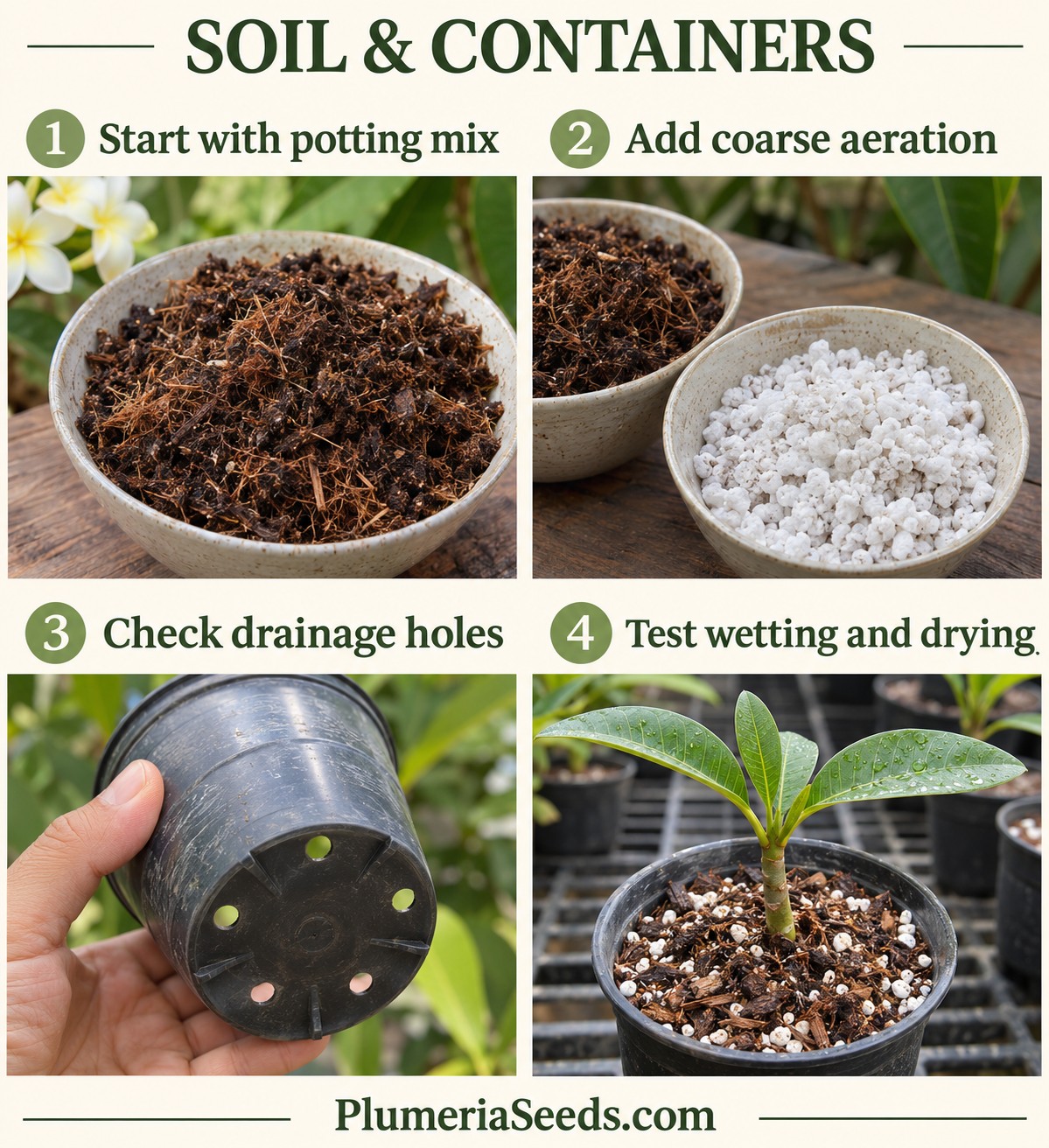
In a container, I want a mix that holds enough moisture for young roots and still allows air to return after watering. “Fast draining” is useful only if the seedling can stay hydrated between checks.
Use fresh container potting mix, not heavy soil dug from the garden. Read the bag for ingredients, added fertilizer, and intended use. Peat, coir, and aged bark behave differently, and products with the same general description can have very different particle sizes.
Three sensible ways to begin
- Ready-made container mix: Start with a reputable, airy mix and test it in the actual pot. It may need no amendment.
- An amended mix: If the base stays too wet, a small trial of two parts potting mix to one part coarse perlite or pumice, measured by volume, is a practical comparison. This is a trial recipe, not a proven best plumeria formula.
- A bark-based nursery mix: An option for growers who can monitor its drying and nutrition. Use aged horticultural bark; coarse mulch and fresh wood chips are not equivalent.
-
Test before transplanting a whole batch
Fill a spare pot, wet the mix thoroughly, let it drain, and compare its weight and moisture over the next several days in your growing location. Check the middle as well as the surface.
Why: The pot, weather, and mix work together. A recipe that works outdoors in humid summer may dry too quickly on a windy patio.
-
Make one adjustment at a time
If it remains sodden, check drainage holes and pot size before adding more ingredients. If it dries too quickly, retain more of the moisture-holding base, reduce exposure, or improve watering access.
Why: A small trial shows which change helps. Repeatedly disturbing planted roots to remix their soil creates another problem.
-
Keep the drainage path open
Use a pot with unobstructed holes. Keep it out of collected runoff and do not add a gravel layer beneath the mix.
Why: Coarse material under finer mix does not reliably improve drainage; the interface can retain water above it.
My growing notes have included Pro-Mix BX with Mycorrhizae. That is a product option, not evidence that added mycorrhizae are necessary for every seedling or guarantee earlier bloom. Test the specific mix you have, account for its fertilizer charge, and judge it by root growth and moisture behavior.
For planting in the ground, first establish a strong plant and choose a genuinely well-drained, frost-protected site. Where water collects, improve the site or stay with containers; a pocket of loose mix in a water-holding hole does not solve drainage. Containers remain the practical choice when plants must move indoors for winter.
References: Oregon State Extension: Container Planting; Wisconsin Extension: Plumeria.