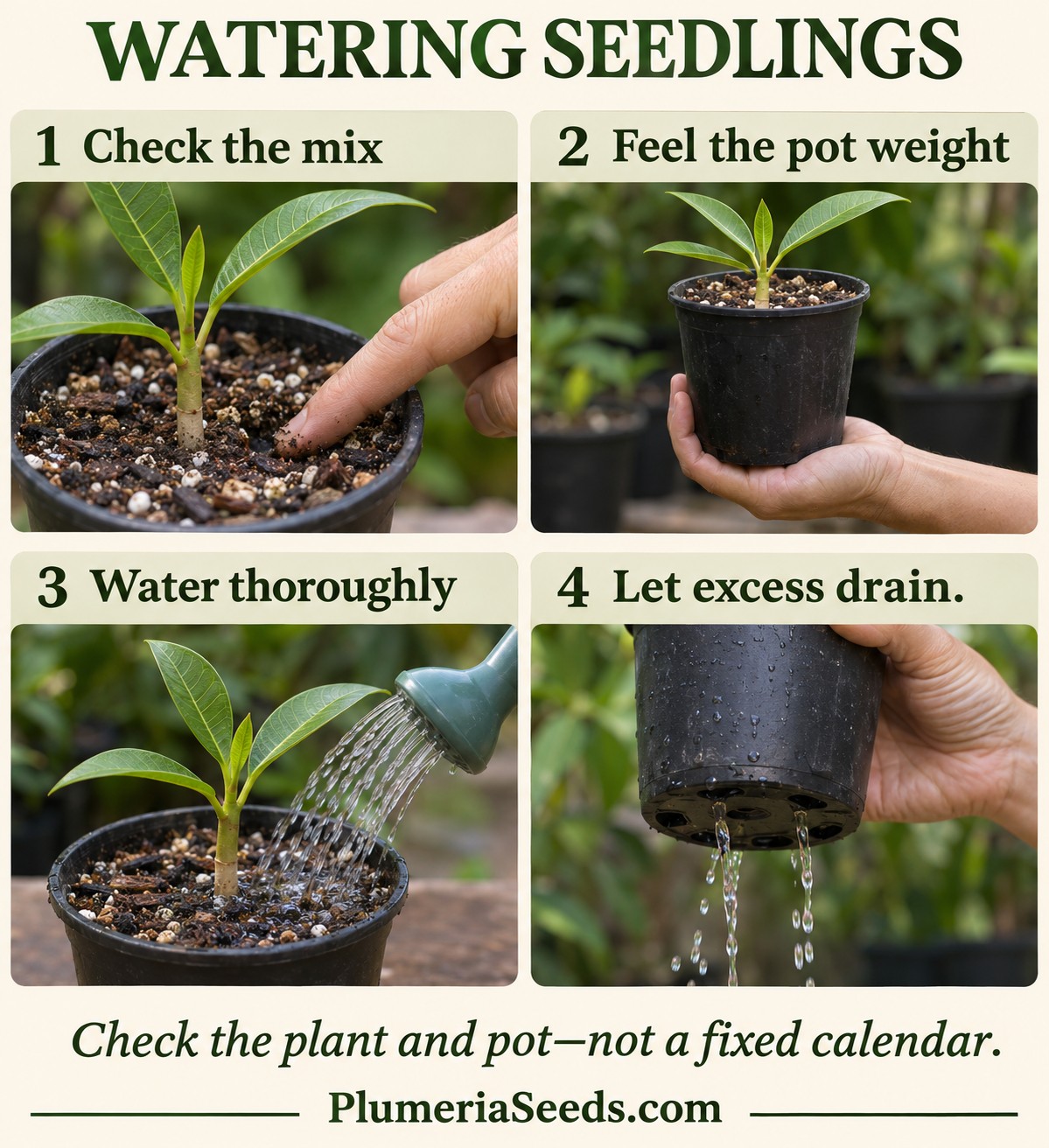
I would rather teach someone how to read a pot than give them a watering day. Rain, heat, wind, leaf area, pot size, and the amount of root growth can all change the answer.
-
Learn the watered weight
After watering and draining, lift a representative pot and record how heavy it feels. Compare it as it dries. With large pots, use a consistent moisture check at the edge of the root zone instead.
Why: Weight is a useful second check when the surface appearance is misleading.
-
Check where the roots are
Feel a small area of mix without digging through roots, or use a clean wooden probe at a consistent location. Treat inexpensive moisture meters as clues, not a diagnosis. In recently transplanted plugs, assess both plug and surrounding mix.
Why: A wet bottom, dry surface, and dry plug require different responses.
-
Water thoroughly when it is needed
Apply water slowly across the mix until drainage appears. Let the pot drain freely. If dry mix repels water, use slow repeated passes to wet it evenly rather than accepting a quick stream down the sides.
Why: A small daily splash may wet the surface while leaving much of the root ball dry.
-
Allow some drying without exhausting the seedling
Let the medium lose moisture and regain air between waterings. Do not deliberately dry a young seedling to repeated wilting or a shriveled stem. In cool, cloudy weather, check first and often skip watering.
Why: Small seedlings have fewer reserves than mature plants. Both persistent saturation and severe drying interrupt growth.
-
Treat wilting as a question
Lift the pot and check moisture. A light, dry pot suggests water shortage; a heavy, wet pot with a wilting plant calls for drainage and root assessment. Move a heat-stressed plant out of extreme exposure while checking it.
Why: Adding water to every wilt can make a root problem worse.
Choose the delivery method: Hand watering makes individual checks easy. Brief bottom watering can rewet a small pot, but remove it and drain afterward. Drip irrigation can suit a larger collection if you check emitters, rainfall, and the wetting pattern. Group pots by size and drying behavior rather than watering every plant for the same number of minutes.
My germination water-tray method is a separate growing system. Moving a rooted plug into ordinary potting mix does not mean the one-gallon pot should remain in standing water.
Well water and persistent nutrient trouble
If new growth stays pale despite reasonable feeding, test irrigation water and the growing medium. Water pH alone does not describe its effect on a pot: alkalinity influences long-term pH change, while electrical conductivity helps screen dissolved salts. Do not add acid or mineral supplements by guesswork.
References: Oregon State Extension: Watering Basics; Penn State Extension: A Water Quality Toolkit for Greenhouse and Nursery Production.