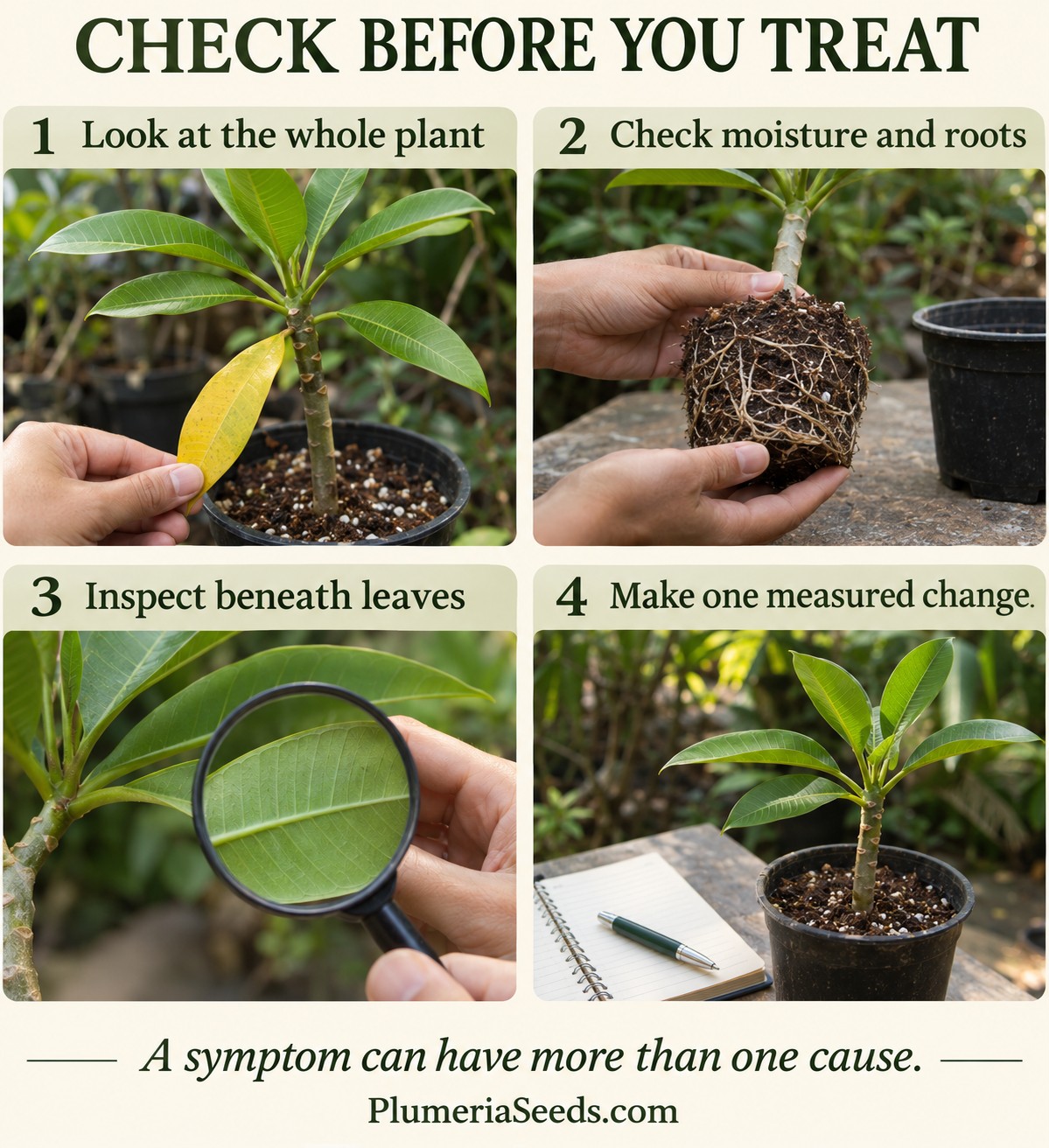
A yellow leaf is a symptom, not a fertilizer prescription. I would start by asking what changed and whether the problem affects one plant, one tray, or the whole collection.
- Record when symptoms started and any recent change in watering, feeding, spraying, location, or weather.
- Check pot weight, drainage, stem firmness, the growing tip, and both sides of leaves.
- Compare an affected seedling with a healthy plant of similar size. Photograph both with their labels.
- Separate plants with suspected pests or progressive soft rot. Correct the most evident problem, record the change, and assess new growth rather than expecting damaged leaves to repair themselves.
Lower leaves yellowing
Check: Normal aging, seasonal change, wet roots, inadequate nutrition
First response: Check growth and moisture before adding fertilizer.
New leaves pale between veins
Check: Root health, medium pH, water alkalinity, nutrient availability
First response: Test persistent problems; do not automatically add iron or Epsom salt.
Long, weak growth leaning toward light
Check: Insufficient light, crowding, overall growth conditions
First response: Improve light gradually and space pots; do not force faster growth with feed.
Crisp margins or tips
Check: Recent feed or spray, dry spells, salts, heat
First response: Review timing and root moisture; pause the suspect treatment.
Wet pot and wilting plant
Check: Blocked drainage, root decay, oversized container
First response: Stop automatic watering and inspect the root system if decline continues.
Distorted newest leaves
Check: Thrips or mites, spray injury, weather damage
First response: Use magnification; identify a cause before selecting a pesticide.
Small but firm seedling
Check: Genetic variation, root space, growing conditions
First response: Track progress. Slow growth alone is not proof of disease or poor future flowers.
Soft, dark base or rapid collapse
Check: Root or stem disease
First response: Isolate promptly and review the disease guide.
These are starting checks, not visual diagnoses. Several causes can produce the same symptom. If several plants deteriorate despite corrected care, get a local extension or plant diagnostic service involved before trying a sequence of products.
Related guide: Common Plumeria Seedling Mistakes.
References: UC IPM: Houseplant Problems; Penn State Extension: A Water Quality Toolkit for Greenhouse and Nursery Production.